Best Water Hose Insulation for RV: Stay Frost-Free on the Road
Answering the need for reliable freeze protection, this guide highlights top insulated and heated RV water hoses. It helps buyers choose the right hose for cold climates, camping trips, or year‑round RV living. Ideal buyers include full‑timers, weekend RVers, and property owners who need safe drinking water while preventing pipe bursts. The following table compares five leading options to streamline your decision.
| Product | Best For | Key Feature | Best Temperature |
|---|---|---|---|
| RVGUARD Heated Water Hose 25FT | Cold climates, RVs that park overnight | Energy-saving thermostat, -20°F protection | -20°F |
| Camco 50-foot Heated Water Hose | Extended runs, long RV setups | Thermostat-controlled heat, drinking water certified | -20°F |
| Camco 25-Ft Heated Water Hose | Compact RV setups, frequent travelers | Thermostat control, NSF/ANSI 61 certified | -20°F |
| FAHKNS Heated Hose 100ft | Very cold environments, longer hose runs | Antifreeze performance, leakage protection | -45°F |
| RVMATE Heated Water Hose 15FT | Compact spaces, quick setup | Thermostat with energy save, lead-free | -20°F |
RVGUARD Heated Water Hose 25Ft — -20°F Freeze Protection

Best for RVs in cold climates and for users who want a compact, energy-efficient solution. This hose uses a smart thermostat and a 7-watt/ft heating cable to protect water lines down to -20°F (-28°C). It is lead and BPA free for safer drinking water and features a five-layer construction with stainless steel connectors to minimize leaks. Choose this if you need reliable frost protection in a shorter 25-foot length and value safety and efficiency.
Pros: energy-saving thermostat, solid insulation, safe water. Cons: limited length compared to longer hoses.
Camco 50-Foot Heated Water Hose — -20°F

Best for campers or properties needing a longer run without sacrificing safety. This hose uses a thermostat-controlled heating cable and NSF/ANSI 61 certified hose for drinking water. It operates on 120VAC with an LED-equipped 6-foot power cord, offering practical monitoring and energy efficiency. Choose this if you require a longer hose for larger sites and prioritize certified drinking water safety.
Pros: long length, drinking water certified. Cons: higher refrigerant exposure for very tight storage spaces.
Camco 25-Ft Heated Water Hose — Compact Option

Best for travelers with limited storage who still need reliable freeze protection. This 25-foot Camco hose offers NSF/ANSI 61 drinking water certification, lead-free construction, and a thermostat-driven heater. It provides practical heat only as needed to save energy. Choose this if you want a balance of compact size and dependable climate protection for smaller RV setups.
Pros: compact size, good safety certifications. Cons: shorter length than the 50-foot option.
FAHKNS 100Ft Heated Water Hose — -45°F
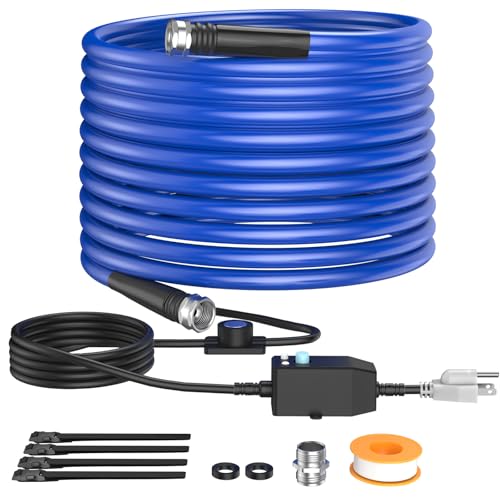
Best for very cold environments and longer hose requirements. The FAHKNS hose claims antifreeze performance down to -45°F (-42°C) and includes a leakage protection device for added safety. The PVC drinking water pipe is lead and BPA free, making it a strong option for longer runs where frost risk is extreme. Choose this if your site experiences deep freezes and you need a longer, insulated solution, but be mindful of storage length.
Pros: extreme cold protection, long length. Cons: potential handling difficulty due to 100-foot size.
RVMATE Heated Water Hose 15Ft — -20°F

Best for compact RV setups and quick deployment. RVMATE offers a thermostat-equipped hose with lead-free materials and a 7-watt/ft heating output for reliable freeze protection down to -20°F (-28°C). It’s suitable for RVs, campers, homes, or gardens where space is limited. Choose this if you want a mid-length, lead-free option with clear safety credentials and straightforward use.
Pros: compact, lead-free. Cons: shorter reach than the longer Camco or FAHKNS options.
H&G Lifestyles 25ft Heated Hose Sleeve
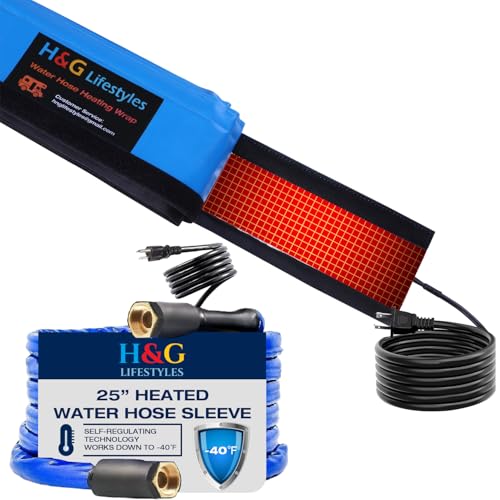
Best as a protective wrap for existing hoses. The sleeve covers up to 25 feet and uses Velcro for quick installation. It’s compatible with many hose brands and helps prevent exterior hose bibs from freezing by adding insulation around the hose rather than replacing the hose entirely. Choose this if you already own a preferred hose and want to upgrade insulation without buying a new heated hose.
Pros: affordable insulation add-on, easy install. Cons: does not heat water by itself; relies on hose’s heater.
Buying Guide
What matters most when choosing a heated RV water hose?
- Length and storage: Longer hoses are great for larger sites but require more storage space. Shorter hoses save space but may need extension for some setups.
- Temperature tolerance: Consider the coldest temperatures you expect. A hose rated to -20°F is common; -45°F is for extreme environments.
- Certification and safety: Look for NSF/ANSI 61 for drinking water hoses and lead/BPA-free construction for safety.
- Energy efficiency: Thermostats that heat only as needed save electricity and reduce costs.
- Durability: Five-layer construction, heavy jackets, and stainless connectors increase longevity and reduce leaks.
- Installation and compatibility: Some products include adapters or are easy to wrap around existing hoses with a sleeve.
Which option fits your scenario?
- Weekend campers in cold climates: A 25–50 foot heated hose with a reliable thermostat is a good balance of length and efficiency (Camco 25 ft or 50 ft).
- Full-time RVers in harsher winters: Consider the FAHKNS 100 ft or RVGUARD 25 ft for robust protection and safety features.
- Storage-limited sites: A compact 15–25 foot option (RVMATE 15 ft) paired with a protective sleeve (H&G Lifestyles) can work well.
FAQ
- Q: Do heated hoses require a dedicated power supply? A: Most operate on standard 120V circuits, but verify cord length and plug type to ensure compatibility with your setup.
- Q: Are heated hoses safe for drinking water? A: Yes, many options use lead-free, BPA-free materials and NSF/ANSI 61 certified hoses for drinking water.
- Q: Can I use a heated hose with an outdoor faucet cover? A: Yes, combining insulation sleeves or covers with a heated hose provides extra protection against freezing.
- Q: What is the typical temperature range for these hoses? A: Most hoses protect water down to -20°F, with some models rated for colder environments.
- Q: Do these hoses heat water continuously? A: Thermostats regulate heating, so the hose heats as needed to maintain water temperature and prevent freezing.
- Q: How do I choose between a 25 ft and 50 ft hose? A: Consider your typical campsite layout, storage space, and the distance between the water source and the RV inlet.