Best Swimming Pool Guard Rails for Inground Access and Safety
Answering the common buyer question: which pool guard rails offer the best combination of strength, grip, and ease of installation for inground pools? This guide highlights five top options designed to improve pool entry and exit for families, seniors, and frequent swimmers. Each pick emphasizes a different strength, from maximum load capacity to best grip covers, so you can choose the right rail for your pool environment and user needs. The top picks are best for homeowners prioritizing durability, corrosion resistance, and simple mounting on concrete or deck surfaces.
Summary table of chosen products:
| Product | Material / Capacity | Best For | Installation Note |
|---|---|---|---|
| GarveeLife Pool Handrail (55″x32″) | 304 Stainless Steel, 375 lbs | Best overall strength and corrosion resistance | Quick mount base plate |
| KODOM Pool Handrail (55×32) | 304 Stainless Steel, 300 lbs | Most comfortable grip surface | Easy install with base mounting |
| VEVOR Pool Rail (55×32) | 304 Stainless Steel, 250 lbs | Best value with blue grip cover | Includes self-tapping screws |
| Garvee (54″ x 36″) Classical | 304 Stainless Steel, 375 lbs | Versatile indoor/outdoor use | Base plate installation required |
| WIMART Pool Handrail (55″x32″) | 304 Stainless Steel, 385 lbs | Highest load capacity and grip covers | Includes nylon grip covers |
GarveeLife 55″x32″ Pool Handrail with Quick Mount Base Plate

The GarveeLife handrail is crafted from 304 stainless steel and supports up to 375 lbs. It includes non-slip grip sleeves to enhance safety in wet conditions, making it a solid choice for households with children or seniors. Best for: homes seeking a robust, corrosion-resistant rail with a straightforward installation. Caution: ensure mounting surface is solid concrete or deck capable of handling dynamic loads.
KODOM Pool Handrail 55×32 with Glue Grip Cover
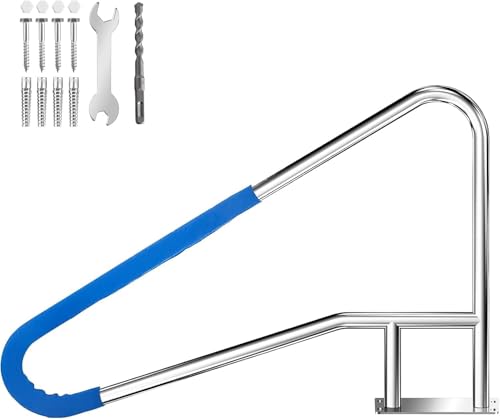
The KODOM rail uses high-quality 304 stainless steel with a 4 ft nylon grip cover for a softer, non-slip touch. It measures 55″ by 32″ and holds up to 300 lbs. Best for: users who prioritize a comfortable grip and forgivable installation with pre-drilled mounting holes. Caution: for saltwater environments, consider additional corrosion considerations or alternative materials.
VEVOR 55×32 Pool Rail with Blue Grip Cover

The VEVOR guard rail uses 304 stainless steel and includes a 4 ft blue grip cover for a secure hold. It supports up to 250 lbs and emphasizes rust resistance for general use. Best for: budget-conscious buyers who still want a solid stainless-steel handrail with a comfortable grip. Limitation: for saltwater pools, rust risk exists—care and maintenance are recommended.
Garvee 55×32 Pool Handrail with Classic Finish

This Garvee model emphasizes easy installation with a base plate suitable for concrete, wood, or brick floors. Made of 304 stainless steel, it’s designed to resist deformation and wear over time. Best for: users needing a versatile indoor/outdoor solution and straightforward setup. Caution: pay attention to base plate dimensions to ensure a proper fit on your deck.
WIMART 55″x32″ Handrail with Blue Grip Cover

The WIMART model offers the highest tested load capacity among the listed options at 385 lbs and includes a soft nylon grip cover for enhanced comfort. Best for: households needing the strongest support and best grip for frequent use. Limitation: higher capacity models may require stricter attention to base mounting integrity and proper anchoring.
Coocure Inground Pool Rail with Nonslip Blue Cover

The Coocure rail emphasizes easy installation with four pre-drilled holes and self-tapping screws, plus a 304 stainless steel construction with a blue non-slip cover. Best for: decks or concrete surfaces where quick mounting is helpful. Caution: ensure the base plate thickness and hole spacing align with your deck’s structure to avoid movement or wobble.
Buying Guide: Key Considerations for Choosing Pool Guard Rails
- Material and corrosion resistance: Most top rails use 304 stainless steel for general use. For saltwater pools, consider 316 stainless or additional protective coatings to reduce rust risk.
- Load capacity: Higher capacity supports more user types, including children and the elderly. Typical ranges are 250–385 lbs in these options.
- Grip and comfort: Look for grip covers (nylon or foam) that provide a non-slip surface while remaining comfortable when wet.
- Mounting system: Quick mount base plates or four pre-drilled holes with mounting screws simplify installation on concrete, wood, or brick decks.
- Installation clarity: Check if the base plate thickness and screw size match your deck structure to avoid wobble or failure under load.
- Indoor vs outdoor suitability: Some rails are marketed for both settings; verify that the design supports outdoor exposure and frequent water contact.
Frequently Asked Questions
- What is the typical weight capacity for inground pool rails? – Most models shown support 250–385 lbs, offering sturdy support for adults and children when used correctly.
- Are stainless steel pool rails safe for saltwater pools? – Stainless steel 316 is generally preferred for saltwater to resist corrosion, while 304 is common but may require more maintenance in salt environments.
- How long does installation usually take? – With pre-drilled holes and included mounting hardware, installation can often be completed in under an hour for a single rail.
- Should I choose a rail with a grip cover? – Grip covers improve comfort and reduce slipping, especially when hands are wet or cold.
- Can these rails be used indoors? – Yes, many models are suitable for indoor pools, spas, or water parks, provided the mounting surface is appropriate.
- What maintenance is recommended? – Regular cleaning to remove mineral buildup, occasional inspection of screws, and basic rust prevention for non-stainless areas help extend life.