Best Rain Barrel Pressure Pump Solutions for Your Water System
Answering the common question, these rain barrel pressure pumps deliver steady water pressure for small watering tasks, irrigation, and household use from rain barrels or gravity-fed systems. They’re best for homeowners who want an automatic, on-demand pump without a battery or for expanding a rainwater setup. This guide highlights five reliable options, noting who each pump is best for and why. A quick buying table is included to compare purpose, lift capability, and typical use cases, helping you pick the right model for your rain barrel setup.
| Product | Best For |
|---|---|
| ECO-WORTHY 33-Series | Small to medium irrigation and RV or marine setups |
| FLUENTPOWER 1/2HP | Rain barrels feeding multiple fixtures or small ponds |
| 55 Gallon Drum Pump (DEF) | Industrial/auto fluids and large 55-gallon drums |
| YOUNGTREE 5.5GPM | Home use with higher flow needs and longer runs |
| TecHome 115V Transfer Pump | Portable, light-duty pumping for gardening tasks |
ECO-WORTHY 33-Series Industrial Pump

- Type: Diaphragm pump, 110V AC, 4.0 GPM, 50 PSI
- Automatic: Smart Pressure Switch; starts on demand, stops when faucets close
- Features: Adjustable pressure 45-70 PSI, self-priming up to 9.8 ft, lift up to 131 ft
- Safety: Thermal overload protection engages above 95°C
Best for: Users who want a reliable, battery-free solution to supply moderate pressure for irrigation, RVs, boats, or garden setups. Choose this if you need a compact, 110V unit with automatic on/off tied to faucet use. Caution: It is not submersible; install in a dry location near the water source.
FLUENTPOWER 1/2HP Rain Barrel Pump

- Type: Submersible, 1050 GPH, with float switch
- Lift: Up to 36 ft, max immersion depth 23 ft
- Automatic: Float switch controls ON/OFF at set levels
- Application: Best for rain barrels, garden ponds, small pools, and cellar drainage
Best for: Homeowners needing moderate flow with vertical lift and an automatic float control for dry- or wet-detection. Better for larger rain barrel setups or drainage tasks. Limitation: Submersible design requires proper submersion and water presence to prevent air pockets.
55 Gallon Drum Pump (DEF)
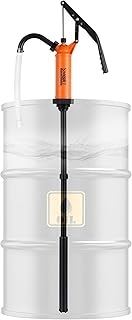
- Type: Heavy-duty pump for 55-gallon drums
- Flow: 9-14 oz per stroke
- Connection: 1-1/2″ or 2″ NPT with double-threaded design
- Seal: Includes PTFE thread seal tape
Best for: Workflows needing fast transfer from large drums, including DEF or other fluids, with a secure seal to prevent spills. Choose this if you work primarily with 55-gallon drums and need a reliable, heavy-duty manual pump. Limitation: Manual pumping requires physical effort and is not a powered transfer pump for continuous use.
YOUNGTREE 5.5GPM Pressure Pump

- Type: Diaphragm pump, 110V AC, 5.5 GPM, 70 PSI
- Lift: Up to 164 ft; Self-priming
- Switch: On-demand pressure switch; automatic start/stop
- Safety: Thermal overload protection; CE certified
Best for: Users needing higher flow and strong suction for home irrigation, RVs, or garden irrigation from a rain barrel. Choose this if you require robust performance with higher pressure and reliable dry-run protection. Limitation: Slightly higher power draw; ensure the electrical supply supports continuous operation.
TecHome Water Transfer Pump

- Type: 115V electric transfer pump, non-submersible
- Flow: 330 GPH; Discharge: 3/4 in; Suction: 3/4 in
- Portability: Lightweight with a portable handle
- Use: Garden hose pumping for transferring water from tanks or rain barrels
Best for: Lightweight, portable pumping tasks in small gardens and hobby projects. Choose this if you want a compact pump for easy transport and simple water transfers. Limitation: Non-submersible design means it should stay out of water to avoid damage; not ideal for full submersion or deep pits.
Buying Guide: Key Considerations for Rain Barrel Pressure Pumps
- Pump type: Diaphragm vs. centrifugal vs. manual. Diaphragm and submersible pumps suit rain barrels, while manual reduces energy use for occasional transfer.
- Flow and lift: Determine GPM or GPH needed and the total vertical height (lift) to fixtures. Higher lift handles longer runs and higher gardens.
- Power source: 110V/AC offers automatic operation but requires wiring; some models are battery-free but rely on water pressure or float switches.
- Automatic controls: On-demand pressure switches and float switches reduce energy use and prevent dry running.
- Submersible vs. external: Submersible pumps are ideal for rain barrels with tight spaces; external pumps suit dry, accessible locations.
- Durability and safety: Look for thermal overload protection and CE or equivalent certifications for longer life in variable weather.
- Installation considerations: Ensure correct fittings (NPT threads, hoses, adapters) and proper sealing to prevent leaks.
Frequently Asked Questions
- What is the typical best use for rain barrel pressure pumps?
They are best for auto-feeding irrigation, small garden hoses, and RV or temporary water needs from a rain barrel, without relying on a municipal supply.
- Do these pumps require electrical power?
Most listed options run on 110V AC power, requiring a reliable electrical supply; some units rely on gravity and pressure switches for on-demand operation.
- Can a rain barrel pump lift water to a second story?
Most residential rain barrel pumps have lift limits from 30 to 160 feet depending on the model; confirm the exact lift rating for your setup to avoid inadequate pressure.
- Are submersible pumps better than external models for rain barrels?
Submersible pumps are convenient when the barrel is deep or narrow; external pumps are easier to service and often require fewer electrical safety concerns near water.
- What maintenance is needed for these pumps?
Regularly inspect seals, clean out debris, and ensure the float or pressure switch operates freely; avoid running dry and protect from freezing conditions in cold climates.