Best Heated RV Water Hoses for Frost-Proof Water Supply
Answering the need for reliable, freeze-resistant RV water supply, these heated hoses protect against cold weather without complicating setups. They are best for RVers, campers, and outdoor workers who must maintain a steady water line in freezing temperatures. The top picks here emphasize safety, lead-free materials, and energy efficiency. Each option is evaluated for freeze protection, ease of use, and practical limitations to help you choose the right hose for your climate and camping style.
| Product | Best For |
|---|---|
| Camco 25-Ft Heated Water Hose | Extreme cold, energy-efficient |
| REHOSEUP 30FT Heated Water Hose | Budget-friendly, versatile outdoor use |
| Bipeoo 30FT Heated Water Hose | Cold climates, complex environments |
| Camco 50-Ft Heated Drinking Water Hose | Longer runs, reliable freezing protection |
| OEBLD 15FT Heated Water Hose | Compact spaces, high visibility |
Camco 25-Ft Heated Water Hose for RV

The Camco 25-Ft Heated Water Hose provides freeze protection down to -20°F (-28°C) with a thermostat-controlled heating cable. It uses NSF/ANSI 61 certified material for drinking water and is lead, BPA, and phthalate-free. Best for RV owners who need reliable winter water without the bulk of longer hoses. Caution: longer runs may require more extended electrical setup and monitoring to ensure the heating cable activates as needed.
REHOSEUP 30FT Heated Water Hose
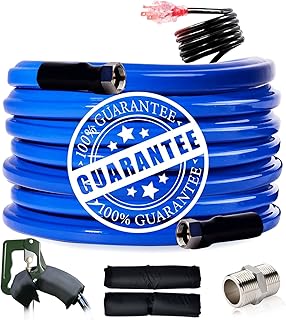
This 30-foot heated hose is rated to -45°F and features a smart self-regulating thermostat. It’s designed for RVs, camping, gardens, and livestock use. Best for travelers needing a flexible, energy-conscious option for very cold weather. Limitation: some users note the need for careful installation to prevent leaks at the fittings; double washers are included to help mitigate this risk.
Bipeoo 30FT Heated Water Hose

Equipped with a five-layer design and lead-free materials, the Bipeoo hose offers -45°F protection and a robust outer jacket for harsh conditions. Best for campers and livestock setups where reliability and durability matter. Choose this if you want a sturdy hose with strong leak resistance and a patent-pending design concept. Caution: some users may prefer hoses with larger fittings for certain RV connections.
Camco Heated Drinking Water Hose for RV, 50 Ft

This 50-foot Camco hose offers freeze protection to -20°F with a thermostat-controlled heating cable and LED indicator. It is lead- and BPA-free, designed for drinking water compatibility, and suitable for longer runs in cold climates. Best for users who need extended reach while maintaining water safety. Limitation: the longer length increases the total energy draw and cable management considerations.
OEBLD Heated Water Hose for RV (15FT)

The OEBLD 15-Foot hose provides reliable freeze protection down to -45°F with an adaptive heating element. It emphasizes a triple-seal connection and LED status for easy monitoring. Best for compact RV layouts or secondary water lines where space is limited. Caution: shorter hoses can be less forgiving if connections are far from water sources; plan hose routing accordingly.
Buying Guide: Key Considerations for Heated RV Water Hoses
What to look for when selecting a heated hose:
- Freeze protection range: Choose a hose rated for your climate, noting the minimum ambient temperature it sustains.
- Material safety: NSF/ANSI 61 compliance and lead-free, BPA-free construction protect drinking water quality.
- Thermostat technology: Self-regulating or thermostat-controlled heating cables affect energy use and heat pattern.
- Hose length and fittings: Longer hoses cover more distance but may require more power and storage space; verify compatible fittings with your RV water system.
- Durability and flexibility: Outer jackets should resist abrasion, UV exposure, and cold cracking; flexible designs help storage and routing.
- Power requirements: Confirm 120V input and cord length to ensure the heating system reaches the hose end.
- Leak protection: Look for double washers or robust seals at both ends to minimize leaks in rugged outdoor environments.
FAQ
- What temperature can heated RV hoses handle?
- Are heated hoses safe for drinking water?
- Do longer hoses use more electricity?
- What if a heated hose leaks?
- Can heated hoses be used indoors?
- How do I install a heated hose?
Most models provide protection down to -20°F to -45°F, depending on the model and ambient conditions.
Yes, hoses with NSF/ANSI 61 certification are designed for drinking water and are free from lead, BPA, and phthalates.
Longer hoses can require more heating length, which may increase energy use. Look for models with efficient thermostats and self-regulating heat.
Choose hoses with reinforced fittings and double washers. Regular inspection and proper connection help prevent leaks.
These hoses are designed for outdoor and outdoor-adjacent use; using them indoors may require ventilation and electrical clearance considerations.
Connect to a water source, route away from sharp edges, plug into a 120V outlet, and verify the thermostat/LED indicators show active heating when needed.